Film Information
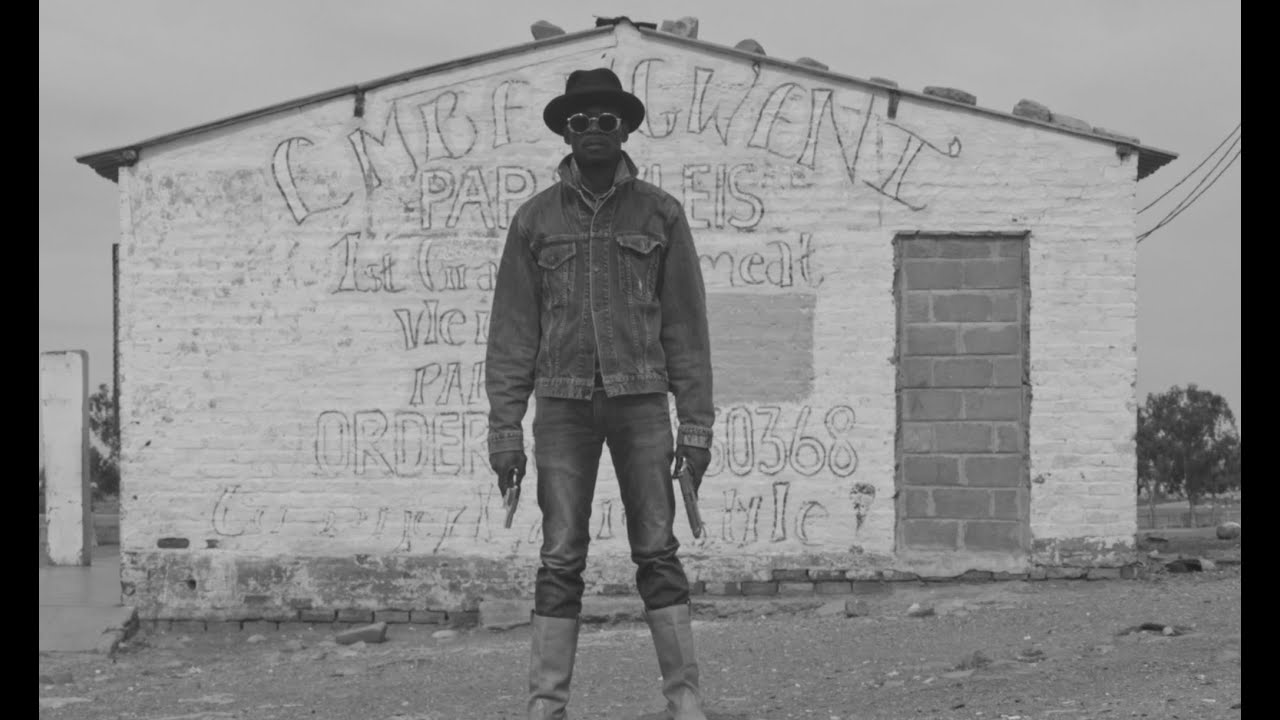
Thus Spake Zolani is a black-and-white gore-filled violent folk-horror that leaves no victims in its protagonist's murderous crusade in a small unnamed South African town. The terror of physical ferocity is unrelenting with several crude obscenities that elevate the film to a strict adult category, including graphic displays of sexual assault, gut-spilling and torture.
For anyone put off by frontal nudity, sexual violence and the image of a man's head being blistered open, this film will be extremely inappropriate. But even for the audience that can stomach all the blood and brutality, Thus Spake Zolani remains a difficult-to-parse experience, best explained as a stream-of-consciousness experiment filled with symbols, imagery and intentional unclearness.
The film is part-salvaged by its excellent score, inspired acting, cinematographic brilliance, and a wide-view camera revealing the overburdening landscape of the town and the long stretch of road that Zolani travels through the film. At each stop, however, is the guarantee of ever-escalating crudeness which blasts excessive symbolism, diminishing shock-value and confounds any possibility of a coherent message.
The beauty of the film's cinematic approach is itself barbarously crushed by a constant barrage of needless savagery. If for any moment, the audience appreciates the artistic time-lapse of clouds rushing through the sky, we are immediately cut back to a demon with protruding teeth and drool rambling in Zolani's backseat. There is never a reprieve from the film's motif. All its space is filled with severe cruelty.
This lack of delicate balance between moments of violence is intentional, but so exaggerated that it can't be set in opposition or comparison to other elements, undermining any possibility of significant thematic contrast. The film sacrifices any ability to discuss the violence it portrays, instead resolving with a vague biblical message, leaving any audience wondering what or why Zolani rips out teeth from a man's smashed-in face, ejaculates into an exhaust pipe and consults with a ghoulish entity which declares a war against all people.
Certainly, Zolani is troubled from the beginning, with a recurring vomiting that symbolises their internal decay. Their primitivism is matched by an instinctual drive to hurt, main, destroy and desecrate. This is self-justified by their patronishing superior attitude where they see their own actions as bringing about a necessary divine judgement, supported by the reversed-audio ramblings of a televangelist that echo through the film—first through a television set and then through Zolani's car radio.
Apart from the demonic entity that guides Zolani into depravity, every other character in the film is fodder for explicit disfiguration. Tension develops, therefore, from Zolani's internal conflict and expectations of which brutal action will be committed next. This two-hour runtime then follows a familiar pattern. A new character is introduced and then they are disposed of in some quick and twisted manner. A crossbow through the heart. A hanging. A spade to the face repeatedly. A billiard ball inside a sock. An array of bullets. A knife. A brick. The issue is not that all the murders have no affect on the viewer, but that they all have the same effect. The film's violence maintains the same consistent senselessness that reinforces its arbitrariness.
This is, of course, the grayscale world that Zolani lives in, a dizzying vertigo, an inescapable insanity. There are various insects which hover around all the dying and dead people, including around Zolani himself. He is raw and rotten and his tirade of terror is just the evidence. By the time the film finally ends, the audience is tortured, not by the violence or the madness but by the meaninglessness. Zolani finally reckons with the deity in their mind. However, his plea is not remorse but blame. 'I have done everything you asked' is the final message of the film and what a weak point to resolve on after 130 minutes of an escalating build up of pain.